Reference and continuity workflow

How to Maintain Character Consistency in Seedance

How can users maintain character consistency in Seedance videos?

Character consistency improves when every shot reuses a clear reference image and the same short character bible for face, age, hair, clothing, and distinguishing features. Begin with close framing and small actions, generate shots separately, and change one variable per retry. Consistency is not perfect; rotation, occlusion, multiple characters, and long complex actions increase identity drift.

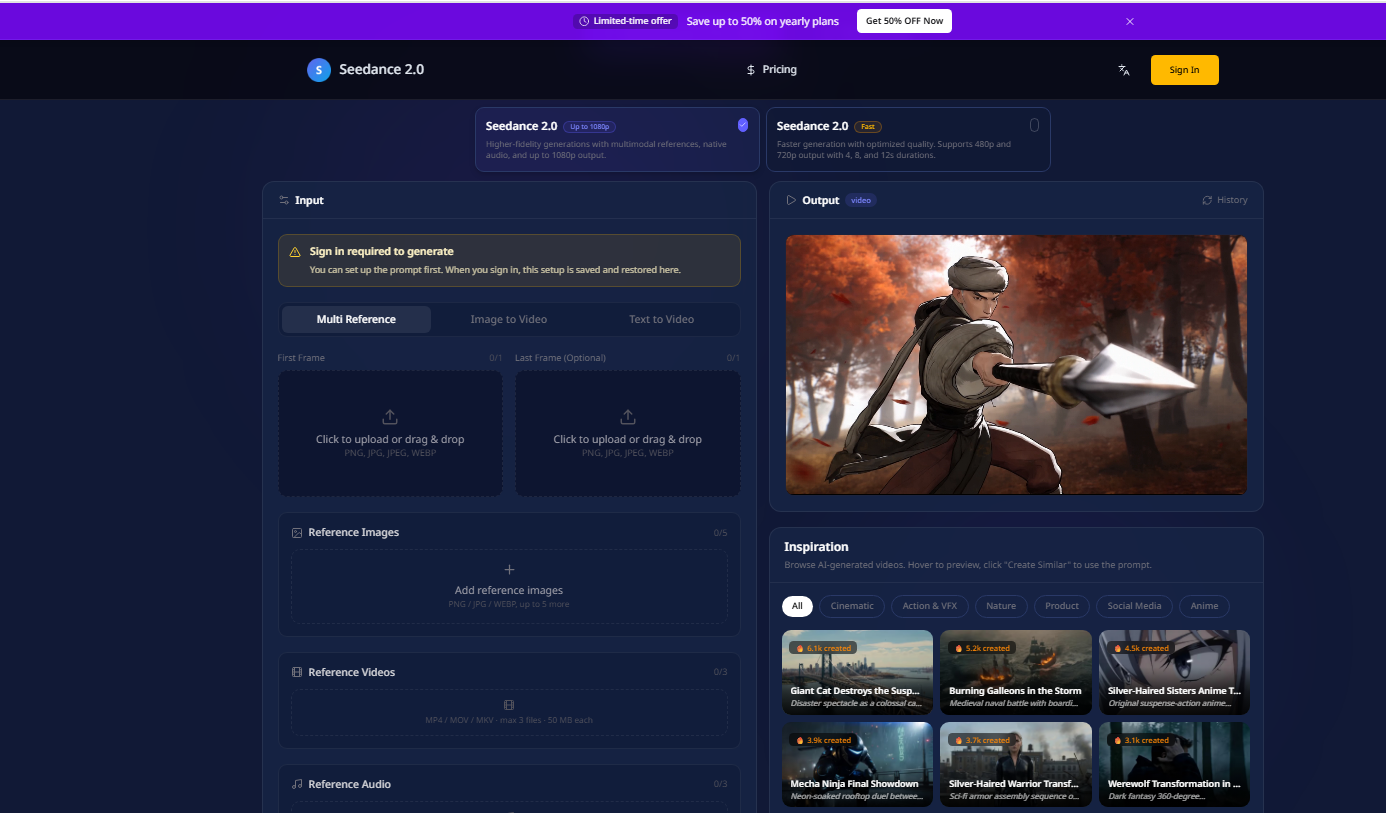
Seedance2Video browser video generator interface
Verified
Primary sources
3
Language
English

This is an editorial production workflow grounded in visible image-reference features and ByteDance model documentation. It does not claim perfect identity preservation or publish a success rate.

01

Reference image requirements

  • Use a sharp image with the face and defining features unobstructed.
  • Prefer neutral, readable lighting over heavy color casts or deep shadow.
  • Keep the hairstyle, clothing, and age cues visible in the anchor image.
  • Avoid tiny subjects, motion blur, strong compression, and crowded backgrounds.
  • Use a reference whose angle is reasonably close to the first target shot.
  • Only upload portraits and identity references you have permission to use.
02

Character Bible template

Keep this block identical across shots. Replace brackets with literal, observable features and remove any field that does not matter.

Reusable identity block

Editorial template - not result-tested
CHARACTER: [name or role], [age range], [face shape], [skin tone], [eye color and shape], [hair color, length, texture, and part], [distinctive feature]. WARDROBE: [top], [bottom], [outerwear], [shoes], [accessories], with the same colors and materials in every shot. Keep facial proportions, apparent age, hairstyle, and clothing unchanged.

Use the same nouns and color words in every shot. Avoid synonyms that may be interpreted as a redesign.

03

Shot difficulty and identity risk

Shot conditionRelative riskWhy it becomes harderSafer first test
Close-up with small expression changeLowerFace remains large and visibleNeutral look to slight smile
Small body movementLower to mediumLimited pose change preserves anchorsSlow head turn or one hand gesture
Side profileMediumFewer frontal facial landmarks remain visibleThree-quarter view before full profile
Full rotation or orbitHighViewpoint and hidden features change continuouslyShort partial arc with slow movement
Face or body occlusionHighThe model must reconstruct hidden identity detailsKeep hands and props away from the face
Multiple charactersHighFaces, wardrobes, and roles can swap or blendIntroduce and test each character separately
04

Multi-shot consistency workflow

  1. 01

    Write the character bible

    Record stable face, hair, age, clothing, body, and distinguishing details in a short reusable block.

  2. 02

    Choose the anchor reference

    Use a clear, well-lit image in which the face, hair, clothing, and silhouette are readable.

  3. 03

    Plan shots by difficulty

    Start with close or medium framing and small actions before testing rotation, occlusion, or multiple characters.

  4. 04

    Generate one shot at a time

    Reuse the same reference and character bible in every shot rather than asking for a long sequence at once.

  5. 05

    Classify the drift

    Identify whether the failure affects face, age, hair, clothing, body, role assignment, or scene continuity.

  6. 06

    Repair one variable

    Simplify the action, camera, framing, or prompt while leaving the remaining identity anchors unchanged.

05

Failure classification and repair

Failure classVisible symptomRepair step
Face driftJaw, eyes, nose, or proportions changeMove closer to the anchor angle; simplify action and camera
Age driftCharacter appears older or youngerRepeat the same age phrase and remove conflicting style words
Hair driftLength, part, texture, or color changesUse one literal hair description and keep it near the start
Wardrobe driftColor, garment, or accessory changesList fixed garments and materials; remove unrelated fashion adjectives
Occlusion reconstructionFace changes after a hand or prop passesReduce or remove the occlusion and shorten the shot
Role swapTwo characters exchange features or clothingGenerate characters separately or give distinct positions and wardrobe anchors
Scene continuity driftLighting or environment changes between shotsCreate a separate scene bible and carry the same reference frame forward
06

Copyable character-consistency prompts

Low-risk close shot

Editorial template - not independently tested
Use the uploaded portrait as the identity reference. Keep the same facial proportions, apparent age, hairstyle, hair color, and wardrobe. Medium close-up, the character looks toward camera and gives a small natural smile. Static shot, soft window light, uncluttered background. Do not change clothing or add accessories.

Controlled side movement

Editorial template - not independently tested
Use the uploaded image as the identity and wardrobe reference. The same character slowly turns from a three-quarter view to a side profile, then stops. Keep face shape, nose profile, hairline, hairstyle, age, and clothing unchanged. Medium shot, slow movement, fixed lighting, no occlusion, no additional people.

Two-shot handoff

Editorial template - not independently tested
SHOT 2. Continue with the same character from the reference frame and the unchanged character bible. Preserve facial proportions, hairstyle, apparent age, wardrobe, and accessory placement. The character takes two slow steps toward the desk. Static medium shot, same room, same time of day, same key-light direction.

Known limitations

  • Perfect character consistency is not guaranteed.
  • ByteDance notes remaining room for improvement in detail stability and multi-subject consistency.
  • Rotation, profile changes, occlusion, long actions, and multiple characters raise risk.
  • The templates above are clearly marked as editorial and have no fabricated success rate.

Run an original controlled consistency test

Use one reference, one character bible, one short action, and one camera choice. Record the prompt and change only one variable on the next run.

Vividra Labs LLC operates Seedance2Video independently. It is not affiliated with, endorsed by, or operated by ByteDance.