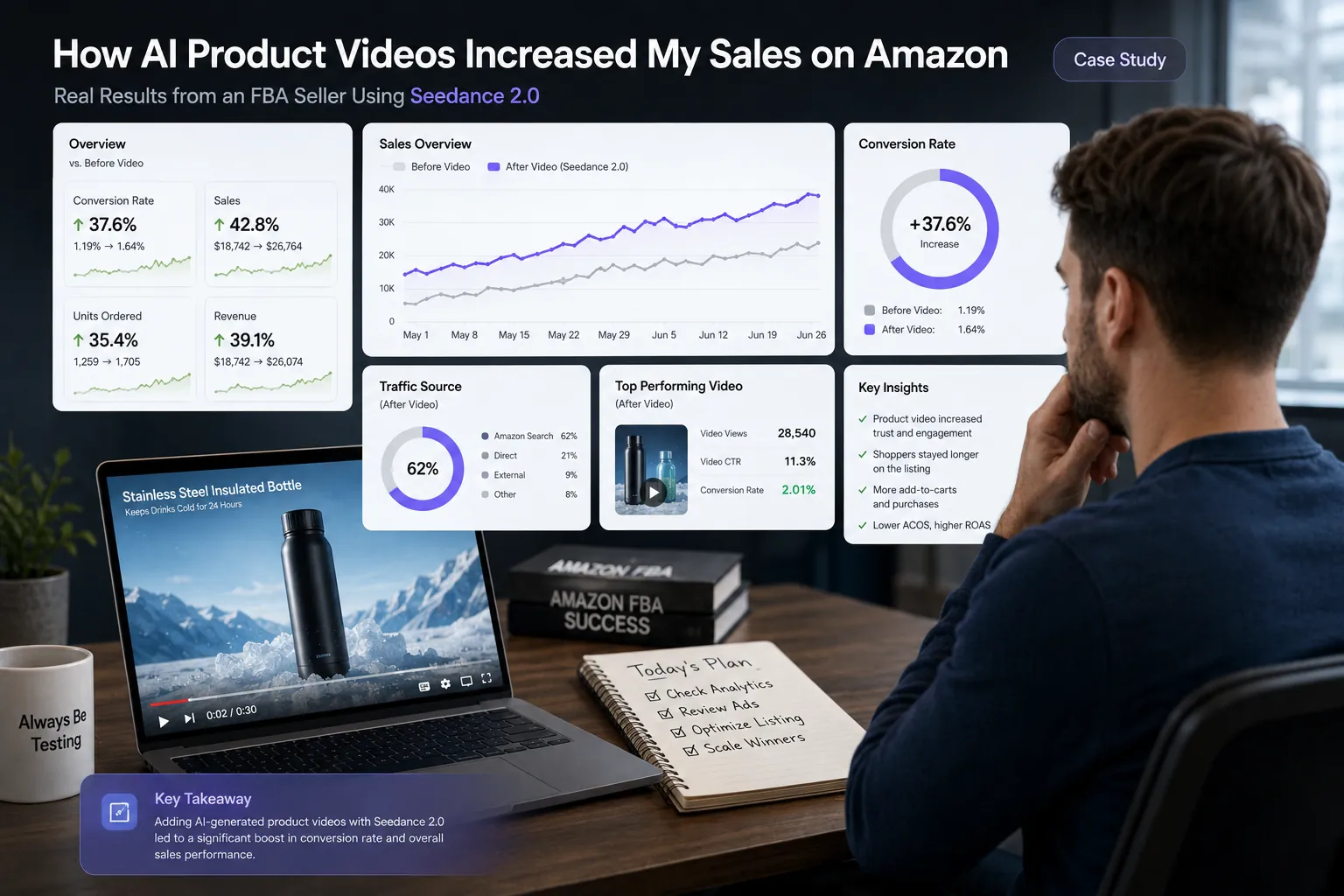
H2-1 — Video template volume & diversity (Seedance Amazon listing videos vs Veo vs Runway)
Amazon shoppers reward clarity: hero SKU rotation, lifestyle beat, spec callouts, and trust badges. Template diversity therefore matters less than whether a template enforces Amazon-safe pacing (readable supers, safe margins, no misleading claims).
Seedance’s 50+ commerce-oriented templates prioritise repeatable layouts for small teams — think “duplicate ASIN variant, swap label art, regenerate.” Veo’s 30+ kits lean toward immersive scene discovery with 3D anchors, while Runway’s 40+ presets often assume you will still finesse shots on a timeline.
H3-1 — Product showcase templates (simulated screenshot)
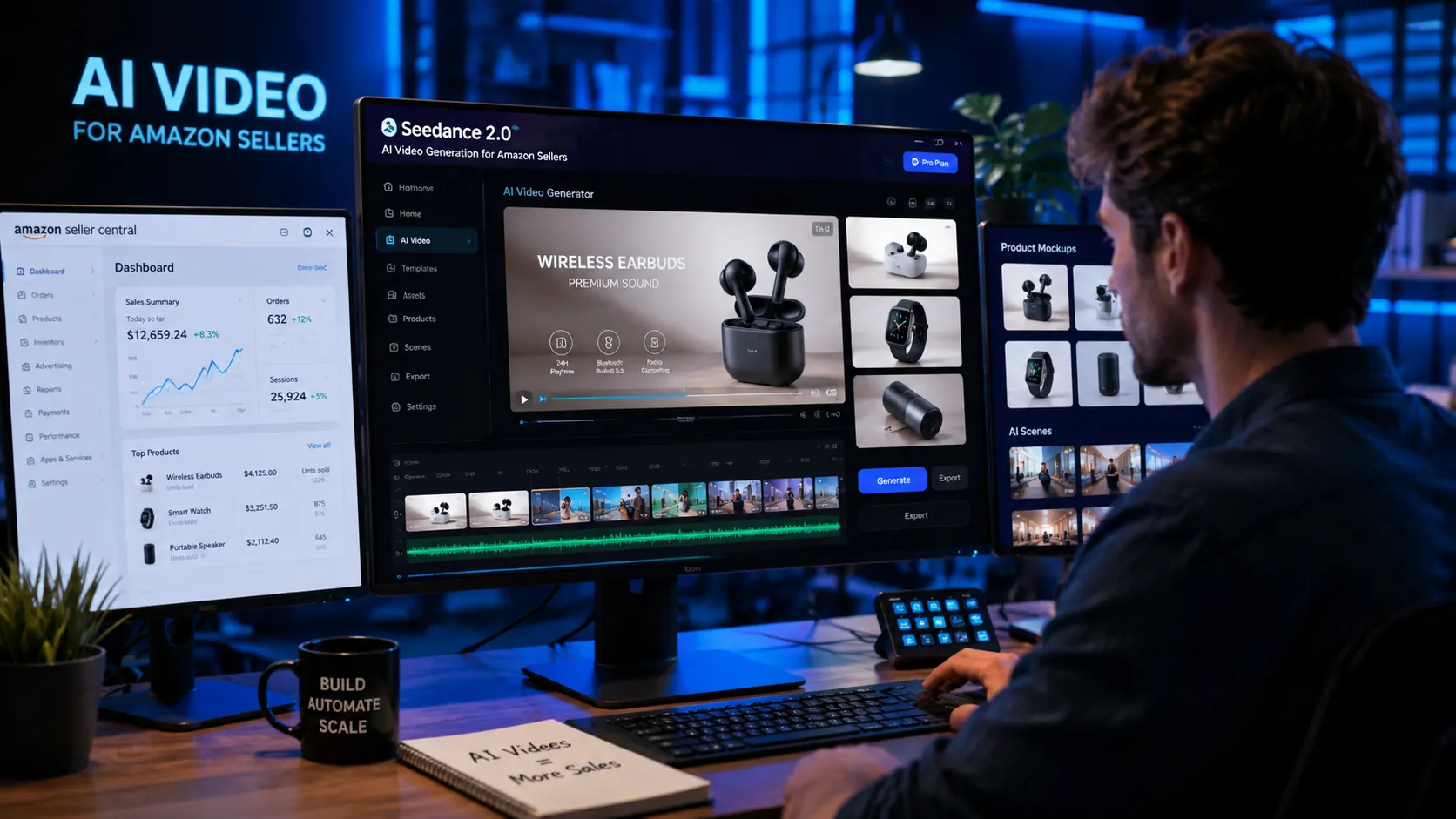
Use a hero product template when your Amazon listing video must open with a crisp packshot, rotate 15°, and resolve to a bullet-list overlay. In Seedance, duplicate the template, drop in your PNG label file, and regenerate — the mock screenshot below shows where template thumbnails would appear in the UI once your design team exports captures.
For Veo-first teams, map the same shot list inside Flow so 3D scene kits align with your GLB or CAD-derived props. Runway teams might instead build a Mogrt-style preset once, then re-link media per ASIN.
H3-2 — Unboxing / tutorial templates (simulated screenshot)
Unboxing templates help FBA sellers explain inserts, warranty cards, and bundle components — critical for reducing returns. Keep text factual and match Amazon Terms of Service for claims.
When simulating this workflow for stakeholders, capture each panel: template selection, storyboard strip, subtitle track (zh/en/es/ko), and MP4 export settings.
Template count alone does not win Buy Box traffic — pairing templates with structured prompts (see /seedance-prompts) and disciplined QC does.